Category Archives: Authors

“I Love You” . . . Why Are We So Afraid to Say It? – Guest Post…

The Story Reading Ape has kindly granted me a guest post on his magnificent and magnanimous blog. Thank you, Chris. You’re a gem in the blogosphere. Would it embarrass you very much if I told you that I love you? ❤


Chris The Story Reading Ape's avatarChris The Story Reading Ape's Blog

dlWl0t

Image is courtesy of Lucie Stastkova

LuSt 4 ART

My sisters and most of my friends and I regularly tell each other “I love you.”  I usually speak the phrase freely and easily but have noticed over my life that many have difficulty receiving as well as speaking the sentiment.  I wonder why that is . . .

I think many of us are afraid of what “I Love You” might imply.  Certainly it depends on who is saying it and in what context.  A lot of us have received salacious messages from people we’ve friended on social networks, and that is never comfortable — nor is it appropriate.  And it most definitely isn’t love.  But lust is an entirely different subject and not fodder for this post.

Among true friends, why are we so afraid to speak our hearts?  Do we think the sentiment might be misconstrued?  Instead of…

View original post 474 more words
EDITING 101: 03 – THAT’s the Problem in Revising…

Editing can be a nightmare! But Susan Uttendorfsky takes some of the fright out of it in Part 3 of her incredible Editing 101 series on The Story Reading Ape’s blog. A big thank you to both Chris and Susan for hosting and sharing 🙂

Chris The Story Reading Ape's avatarChris The Story Reading Ape's Blog

Originally posted as the Dun Writin’—Now Whut? series on this blog, EDITING 101 is a weekly refresher series for some of you and brand new for others.

Courtesy of Adirondack Editing

THAT’s the Problem in Revising

What’s the problem?”

That’s the problem.”

What?”

That.”

I don’t get it.”

That’s the problem.”

Sound like the old “Who’s on first” routine? Extraneous words that make a writer’s work bulky need to be eliminated. But how can you eliminate words that you don’t even see? That’s the problem, and that is one of those words that can usually be cut. Dialogue that is casual regularly contains many incidences of that word, but when it comes to writing, that can usually be deleted.

Are you still confused? If a sentence is understandable without “that” in it, take it out.

Example: “She told him that she was leaving” reads just fine…

View original post 505 more words

A Thriving Thursdays Introduction – Guest Post…

Teagans Geneviene serves up a little humor and advice, along with engaging trailers to her books, as a guest on The Story Reading Ape. Hop over and enjoy this delightful post 🙂

Chris The Story Reading Ape's avatarChris The Story Reading Ape's Blog

Minion writing

I was delighted when our Ape in Chief invited me here to the tree-house to do a mini-series.  Those of you who know me, are used to seeing me write fiction for my blog, Teagan’s Books.  However, for these posts, I’m sharing my “office” side.  While it’s not part of my job at the moment, I’ve written a log of motivational messages.  I continued that via my LinkedIn blog where I do mini posts.

We’re inundated with  information. That can result in a lot of gigo… garbage in — garbage out.  Yet one person’s trash is another person’s treasure.  When I stumbled across this quote, I thought it was a little gem.  Let’s give it a try.

Make a list of things that make you happy.

Make a list of things you do every day.

Compare the lists.

Adjust accordingly.

Enough said.

Thank you, my dear Ape, for…

View original post 313 more words

Guest Post: Finding that book inside you

Ari Meghlen hosts the inspirational Sally Cronin, who offers superb advice on breaking into publishing through writing non-fiction. A must-read for new as well as veteran authors…

Ari's avatarAuthor Ari Meghlen Official Website

This week’s guest post is by the lovely Sally Cronin who is discussing the option of writing Non-Fiction books.

sallyFinding that book inside youby Sally Cronin

Not everyone can dive into publishing with a best-selling novel, and most successful authors who have sold a million copies of their books are a rare breed.

Writing and then marketing our own books can be exciting but it can also be a daunting task. Whilst most of us who write love the process, we understand that we are competing with hundreds of thousands of other fiction titles that are published each year. This is particularly true if you are writing within one of the most popular of the genres such as Thrillers, Mystery or Fantasy.

View original post 1,353 more words

New Series – Smorgasbord Short Stories – Seeing is Believing – Sally Cronin

AUTHORS:  Sally Cronin is accepting short-story submissions for free promotion on her largely followed blog. Don’t miss this terrific opportunity and her own beautiful story that she shares ❤ 

Like my New Facebook Timeline Header?

The Story Reading Ape is an ardent and unflagging supporter of authors. He and his sister, Lorna, recently published their mother’s poetry, giving her a voice in the world posthumously. Hop over to Chris’ blog and check out the terrific reviews this book is receiving as well as the striking facelift he has given his FB cover image…

4 Top Tips For Self-Publishing Your First Book With @Pokercubster

Debby Gies  is a master of many things, not the least of which is indie publishing. Head over to Sacha Black’s blog to read Debby’s excellent guest post and garner some very important tips on editing and formatting your manuscript, writing your book blurb, and developing your cover…

Sacha Black's avatarSacha Black

Self pub tipsWriters have a shit load of decisions to make:
Who to kill today, knife em or hang em, daily word count totals, book prices, whether to drown your book blurbing sorrows with vodka or wine… the list goes on.

But one of the biggest of all decisions of all is whether you’re going to run the rat race to traditional publishing, or  push the shiny red button yourself and claim the indie badge.

I made my decision. My blood runs thick with indie colours.

Publishers have their place, I’ll never see my books in a store *weeps* but that sure as shit ain’t enough of a reason for me to go begging book in hand to their doorstep.

Maybe there will come a time when I might need them and I’ll wander up tail between my word covered thighs. But I haven’t slaved over my book for two sodding years, only to be told…

View original post 2,290 more words

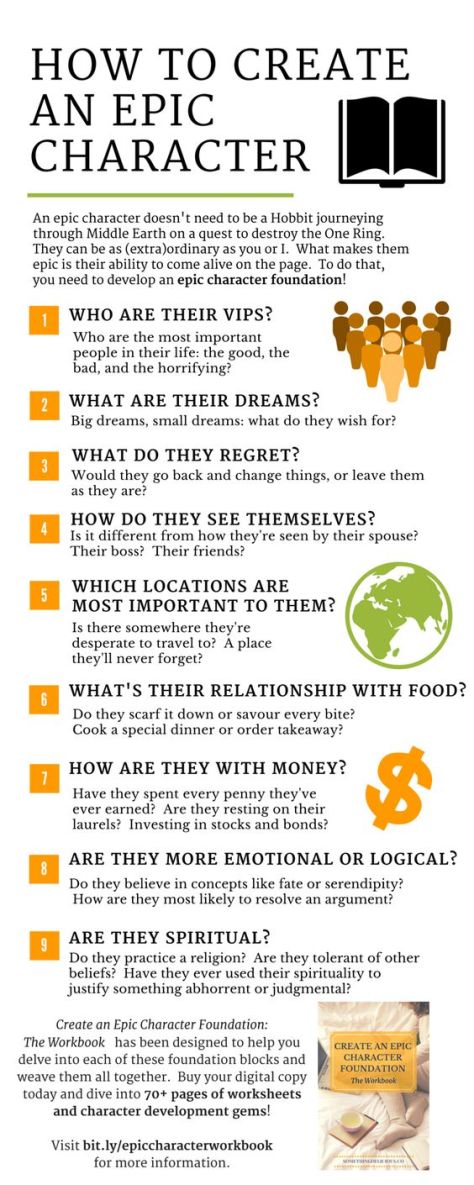
How to create an Epic Character Infographic…

Make your characters come alive! Build an epic character foundation. Visit Chris’ blog to learn how…

Chris The Story Reading Ape's avatarChris The Story Reading Ape's Blog

To find out more about Victoria Fry and her free email course,

click on the link or Infographic below:

How to create an Epic Character 

image

View original post

Smorgasbord Autumn Reading – Krishna’s Counsel by Mira Prabhu

I like to think of Mira Prabhu as a spunky visionary wielding ruthless compassion. Her books delight, mesmerize, enthrall, and encourage the soul to grow, if even a little. Catch this delightful interview on Sally Cronin’s blog…

EDITING 101: 02 – Description Depression…

Susan Uttendorfsky brings us her second great article in her Editing 101 series on The Story Reading Ape’s blog: How and why not to over or under describe scenes and characters…

Chris The Story Reading Ape's avatarChris The Story Reading Ape's Blog

Originally posted as the Dun Writin’—Now Whut? series on this blog, EDITING 101 is a weekly refresher series for some of you and brand new for others.

Courtesy of Adirondack Editing

 Do You Have Description Depression?

Are you a writer who uses rich, lush descriptions for their settings and characters? Or one who just wants “the facts, Ma’am, just the facts”? Is it an effort to decide how much description to use, where, and exactly what?

If you struggle with Description Depression in your writing, you’re not alone. There isn’t a “correct” way to use description in fiction, although, in my humble opinion, you’re better off using too little than too much.

In over describing, a writer runs the risk of annoying their readers. Many readers admit to skipping over large amounts of description. It didn’t used to be that way. Before the age of movies, television, the Internet, and smartphones…

View original post 486 more words