Category Archives: Writing

EDITING 101: 12 – Directions and Impossibilities…

In Part 12 of her Editing 101 series, Susan Uttendorfsky covers directional redundancies and impossible actions. Do we stand up or do we stand? Do we throw our eyes across the room or do we throw someone a scathing glance? Hop over to The Story Reading Ape to read this enlightening post . . .

Chris The Story Reading Ape's avatarChris The Story Reading Ape's Blog

Originally posted as the Dun Writin’—Now Whut? series on this blog, EDITING 101 is a weekly refresher series for some of you and brand new for others.

Courtesy of Adirondack Editing

Directions and Impossibilities

Welcome to today’s article! I hope you’re keeping busy and life is not getting in the way of your writing schedule too much.

We’re going to talk about two short items today. The first is directional redundancies. It’s a big term, isn’t it? It was covered briefly in EDITING 101: 01, Redundancies, but I wanted to go a little further with it. In the previous article, one of the examples was “Her tears ran down her cheeks,” and I pointed out that tears can only run in one direction, can’t they? When was the last time you ever saw somebody’s tears run up their cheeks? (Perhaps if they were hanging upside down on a jungle gym, but…

View original post 402 more words

Meet the Author! Andrew Joyce

Andrew Joyce is a guest on Books and Opinions, LLC, where he talks about the research involved when writing his four novels. Research can become convoluted at times and be pretty exasperating, especially when you thought little research would be involved at the outset! And yes, that’s exactly where my head was when I began writing my current novel. But we can count on any detail overlooked being pointed out by a reviewer. Andrew addresses this as well. Hop over to Angela‘s blog to read this superb post…

Angela's avatar booksandopinions.com

Biography:

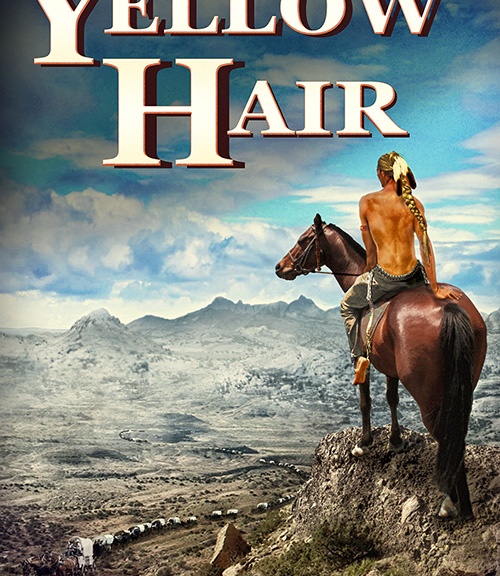
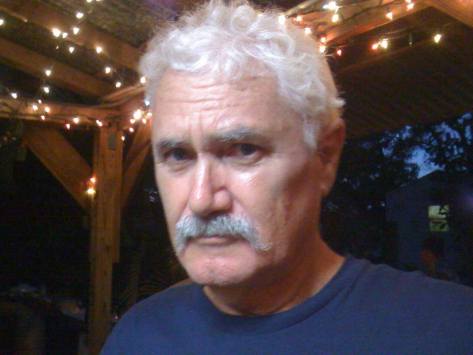
Andrew Joyce left high school at seventeen to hitchhike throughout the US, Canada, and Mexico. He wouldn’t return from his journey until decades later when he decided to become a writer. Joyce has written five books, including a two-volume collection of one hundred and fifty short stories comprised of his hitching adventures called BEDTIME STORIES FOR GROWN-UPS (as yet unpublished), and his latest novel, YELLOW HAIR. He now lives aboard a boat in Fort Lauderdale, Florida, with his dog, Danny, where he is busy working on his next book, tentatively entitled, MICK REILLY.

andrew-joyce-image

How he came to write this book:

My name is Andrew Joyce and I write books for a living. I would like to thank Angela for allowing me to be here today to promote my latest, Yellow Hair, which documents the injustices done to the Sioux Nation from their first treaty with the…

View original post 1,168 more words

EDITING 101: 11 – Using a Thesaurus…

Susan Uttendorfsky brings us Part 11 of her Editing 101 series on The Story Reading Ape: Using a Thesaurus. Do you want your writing to sound colorful or pompous? Hop over to Chris Graham’s blog for the details…

Chris The Story Reading Ape's avatarChris The Story Reading Ape's Blog

Originally posted as the Dun Writin’—Now Whut? series on this blog, EDITING 101 is a weekly refresher series for some of you and brand new for others.

Courtesy of Adirondack Editing

Using a Thesaurus

When you were in grammar school, you were taught the terms antonym and synonym. An antonym is a word that means the opposite of another word: love/hate, hot/cold, spring/fall, light/dark. Synonyms are words meaning the same thing (or nearly the same thing): light/bright, traitor/Benedict Arnold, flat/horizontal, soft/cushiony. A thesaurus is a book which lists synonyms for many words and can come in very handy for a writer. The first one you were exposed to was probably Roget’s Thesaurus. The one I like to use is the Oxford American Writer’s Thesaurus. If you don’t want to use a book, there are online thesauri, such as http://www.thesaurus.com and http://freethesaurus.net/. Microsoft Word has a built-in thesaurus. You can…

View original post 447 more words

Food in Fiction – Part 3 – Guest Post…

Christine Campbell is a guest on The Story Reading ape today, bringing us Part 3 of her Food in Fiction series. She discusses food as a central character in our novels. I think Countess Chocolate would make a delectable protagonist 🙂

Chris The Story Reading Ape's avatarChris The Story Reading Ape's Blog

unnamed-4

In the first two articles on this subject, we gave some thought to scenes in novels we’ve read where food played an important role, and how their attitude to food can reveal things about your character’s character. We looked at some examples, and talked about how important food is in our lives and, by extension, the lives of fictional characters.

I thought it would be interesting to think now about food as a central character in its own right. For instance, in Chocolat by Joanne Harris, chocolate plays the most important role. Without it, there would be no story.

When an exotic stranger, Vianne Rocher, arrives in the French village of Lansquenet and opens a chocolate boutique directly opposite the church, Father Reynaud denounces her as a serious moral danger to his flock – especially as it is the beginning of Lent, the traditional season of self-denial. As…

View original post 689 more words

EDITING 101: 10 – What Happens When You Die? – NOT in a Metaphysical sense…

In Part 10 of her Editing 101 series on The Story Reading Ape, Susan Uttendorfsky discuses the need for authors to plan for how they want their intellectual property handled in the event of their death..

Chris The Story Reading Ape's avatarChris The Story Reading Ape's Blog

Originally posted as the Dun Writin’—Now Whut? series on this blog, EDITING 101 is a weekly refresher series for some of you and brand new for others.

Courtesy of Adirondack Editing

What Happens When You Die?

Wait, wait, don’t run away.

This is not a religious post.

This is a practical, necessary discussion about your writing, your books, your accounts, etc., when you bite the dust.

It’s going to happen to all of us, sooner or later, and writers have additional details to worry about—or their heirs and estates, if the writers don’t address it. What happens to your copyright? What happens to your accounts? Who can keep selling your books? There are lots of questions to answer, and it’s best if you think about it ahead of time. You’ve learned a lot through your journey of writing, publishing, and marketing. How many years did it take you to get where you…

View original post 396 more words

Guest author Sally Cronin, book promotion, writing, blogging, author services, D.G. Kaye

D.G. Kaye interviews Sally Cronin on her series, Guest Author Friday – Who Has a New Book? Sally is well-known in our author blogging community and much loved for her generosity, diversity, and open heart. Like Sally, Debby Gies, aka D.G. Kaye, is a prolific author and generous soul who is always ready to lend a hand. Sally discusses her book-in-progress, The R’s of Life, and how writing it on her blog is benefiting her writing process. Hop over to Debby’s blog and learn more about Sally, her new book, and how she manages a busy life ❤ 

guest-post-header-by-debby-giesI’m thrilled to be featuring today’s guest, Sally Cronin here on my blog! Many of you in the blogosphere may know Sally, and for the many more of you who don’t, you’re in for a treat!

sally-new

About Sally:

After working in a number of industries for over 25 years, I decided that I wanted to pursue a completely different career, one that I had always been fascinated with. I began studying Nutrition and the human body twenty years ago and I opened my first diet advisory centre in Ireland in 1998.

Over the last 18 years I have practiced in Ireland and the UK as well as written columns, articles and radio programmes on health and nutrition. I published my first book with a Canadian self-publisher in the late 90s and since then have republished that book and released eight others as part of our own self-publishing company. Apart from health I also enjoy writing fiction in the form of novels and short stories.

Sally is not only a talented and diverse writer of several books, but she’s one of the most generous bloggers around who offers several author promotion series on her blogs for authors to promote their books on her blog. I am honored to have been one of those author’s who she has promoted several times, and blessed to have her friendship. And in today’s interview, we will be learning a little more about Sally, and about her interesting decision she made to write her latest book, The R’s of Life, on her blog.

rs-of-life

“Thank you for inviting me over today Debby …”

It’s my pleasure to have you over Sal, and now let’s get into the goods! 

Sally, please tell us a little about how and why you came up with the idea to write The R’s of Life?

I was actually browsing an online thesaurus looking for some alternatives to describe respect.  While I was in the R section I noticed that a great many words applied to life’s experiences and I jotted down a few. Just for the fun of it I then expanded the list and found around 35 possible chapter headings.  I had no intention of writing another book but I became intrigued about where it might lead me.

View Original Post

EDITING 101: 09 – Cutting “ly” Adverbs and Enhancing Scenes… (LINKS RQD from 06)

In Part 9 of her Editing 101 series on the The Story Reading Ape’s blog, Susan Uttendorfsky talks about cutting “ly” adverbs from our manuscripts, which will enhance scenes and add to the word count. “Rover sniffed excitedly, hot on the trail” or “Rover threw his head in the air and barked as he turned toward me, indicating that I should follow. At my first step he tore off ahead, sniffing the ground and wagging his tail, hot on the trail of the killer”? Head over and try your hand at rewriting one of Susan’s easy-way-out sentences…

Chris The Story Reading Ape's avatarChris The Story Reading Ape's Blog

Originally posted as the Dun Writin’—Now Whut? series on this blog, EDITING 101 is a weekly refresher series for some of you and brand new for others.

Courtesy of Adirondack Editing

Cutting “ly” Adverbs and Enhancing Scenes

Good morning, proactive, hands-on self-editors! Are you ready for your next task?

In EDITING 101: 03 ‘THAT’s the Problem in Revising’, we talked about cutting out individual words and decreasing word count. I told you then we’d talk further about more cutting, but in a way which would increase your word count. That’s what will happen when you cut out “ly” adverbs.

First off, why are “ly” adverbs so horrible? They’re not. Yes, you heard me right—they’re a perfectly legitimate part of English and their appropriate use is not prohibited. Let me state it another way:

  • It’s ok to use “ly” adverbs!

I think she’s really gone off the deep end this time, Chris. Honestly…

View original post 469 more words

EDITING 101: 08 – Using Song Lyrics in your Manuscript…

Susan Uttendorfsky is a guest on The Story Reading Ape with Part 8 of her EDITING 101 Series: Using Song Lyrics in your Manuscript. While many of us might think song lyrics would animate a romantic scene, Susan gives us several good reasons why not to use them…

Chris The Story Reading Ape's avatarChris The Story Reading Ape's Blog

Originally posted as the Dun Writin’—Now Whut? series on this blog, EDITING 101 is a weekly refresher series for some of you and brand new for others.

Courtesy of Adirondack Editing

Using Song Lyrics in your Manuscript

You’ve just written the most perfect restaurant love scene imaginable. As your two main characters unite on the dance floor, the haunting strains of “Unchained Melody” play in the background. The lovers gaze deeply into each other’s eyes as the song’s lyrics pass through their ears, melding their souls together in acoustical rapture:

Oh, my…”

Wait! Stop! Halt!! Turn off the radio, unplug the phonograph, and disconnect your online radio station! Are you crazy? Are you looking for a lawsuit?

<Author looks around incredulously>

Who, me? Now what does this woman want me to do? Eliminate the perfect words from this scene?”

Yep, that’s exactly what I want you to do. You’re not…

View original post 515 more words

Basics Every Indie Author Needs Before Publishing a Book – Guest Post…

Yecheilyah Ysrayl is The Story Reading Ape’s guest today, discussing the difference between a writer and an author, as well as outlining the 3 basics every aspiring author should do before publishing a book: Investment, Author Platform, Social Media. As most of us know who have been at it a while, these are 3 staples for the published author as well. Are you a writer or an author?

Chris The Story Reading Ape's avatarChris The Story Reading Ape's Blog

Blog Post 2

When I published my first book, I didn’t see my writing as a business. It was just me doing what I’ve always wanted to do. However, as I began to learn and as I continue to learn, I quickly discovered why Self-Publishing requires so much work: It’s a business.

That doesn’t take away from the fun of it, but the realization did help me to become more organized. I quickly learned why no one was buying: I wasn’t working! Writing is working, technically, and I was doing plenty of that. However, I was not working on the skill of writing, researching my industry, understanding tips to help me to write better books, promoting, marketing, and everything in-between. I was writing, sure. But the business of writing? I didn’t even know it existed. I was a writer and that was all. When I got into the business of writing however, that’s…

View original post 848 more words

Andrew Joyce, Author

I am thrilled to welcome Andrew Joyce as my guest today.

Andrew Joyce

Andrew is a brilliant storyteller whose continuing adventures are kept on a short leash by his canine companion, Danny the Dog.

Danny XXlI read and reviewed Andrew’s Huck Finn trilogy after having devoured each of the three novels. You can find my rave reviews here.  Although, if you go to Andrew’s Amazon page and click on each of his books, you will find them rife with 5-star reviews.  Apparently, I am only one among myriad Andrew Joyce fans!

Andrew is here today to tell us about the journey that inspired him to write his latest book, Yellow Hair.  Welcome, Andrew! It is a pleasure to host you on my blog.

*************
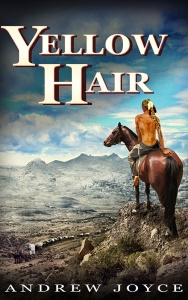
book-andrew-yellow-hair-2Thank you, Tina. My name is Andrew Joyce and I write books for a living. Tina has been kind enough to allow me a little space on her blog to talk about my latest, Yellow Hair.

Yellow Hair documents the injustices done to the Sioux Nation from their first treaty with the United States in 1805 through Wounded Knee in 1890. Every death, murder, battle, and outrage depicted actually took place—from the first to the last. The historical figures that play a role in my story were real people and I used their real names. I conjured up my protagonist only to weave together the various events conveyed in my fact-based tale of fiction. Yellow Hair is an epic tale of adventure, family, love, and hate that spans most of the 19th century. It is American history.

The inspiration for the book came to me when I was reading a short article and it made reference to the Great Sioux Uprising of 1862. It also mentioned that the outcome involved the largest mass execution in the history of the United States. That piqued my interest.

When I started my research into the incident, one thing led to another and before I knew it, I was documenting the entire history of the Sioux, who are also known as the Dakota, vis-à-vis the relationship between them and the United States.

Because the book exists only because I read the phrase, “the largest mass execution in the history of the United States,” I’ll tell you a little about that. What follows is an extremely abbreviated version of events.

The Dakota signed their first treaty with the United States in 1805 when they sold a small portion of their land to the Americans for the purpose of building forts. It was right after the Louisiana Purchase and President Jefferson wanted a presence in the West. At the time, “the West” was anything on the western side of the Mississippi River.

In the treaty of 1805, the Dakota sold 100,000 acres to the book-andrew-resolutionAmericans. The agreed-upon price was $2.00 per acre. But when the treaty came up before the Senate for ratification, the amount was changed to two cents per acre. That was to be a precursor for all future treaties with the Americans. There were subsequent treaties in 1815, 1825, 1832, 1837, and 1851, and basically the same thing happened with all those treaties.
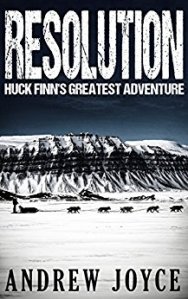
In 1837, the Americans wanted an additional five million acres of Dakota land. Knowing it would be a hard sell after the way they failed to live up to the letter or spirit of the previous treaties, the government brought twenty-six Dakota chiefs to Washington to show them the might and majesty that was The United States of America.

The government proposed paying one million dollars for the acreage in installments over a twenty-year period. Part of the payment was to be in the form of farm equipment, medicine, and livestock. Intimidated, the Indians signed the treaty and went home. The United States immediately laid claim to the lands—the first payment did not arrive for a year.

The significance of the 1837 treaty lies in the fact that it was the first time “traders” were allowed to lay claim to the Indians’ payments without any proof that money was owed . . . and without consulting the Indians. Monies were subtracted from the imbursements and paid directly to the traders.

By 1851, the Americans wanted to purchase all of the Dakota’s remaining lands—twenty-five million acres. The Sioux did not want to sell, but were forced to do so with threats that the army could be sent in to take the land from them at the point of a gun if they refused the American’s offer.

“If we sell our land, where will we live?” asked the Dakota chief.
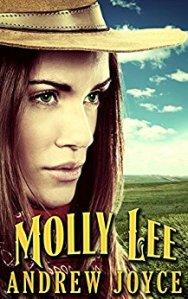
book-andrew-molly-lee“We will set aside land for the Dakota only. It is called a reservation and it will be along both banks of the Minnesota River, twenty miles wide, ten on each side and seventy miles long,” answered the Commissioner of Indian Affairs.

The Dakota were offered six cents an acre for land that was worth at least a dollar an acre. The payment would be stretched out over a twenty year period and was to be made in the form of gold coins. One year later, in 1852, the Americans took half the reservation, the seventy miles on the north side of the river. The Dakota were now reduced from a nation of fierce, independent people to a people dependent on hand-outs from the ones who stole not only their land, but also their dignity.

The Dakota were forced to buy their food from the traders who ran trading posts at the Indian Agency the U.S. Government had set up on the reservation. All year long the Dakota would charge what they needed. When the yearly payment for their land arrived, the traders would take what they said was owed them. Subsequently, there was very little gold left for the Dakota.

By 1862, the Dakota were starving. That year’s payment was months late in arriving because of the Civil War. The traders were afraid that because of the war there would be no payment that year and cut off the Dakota’s credit. The Indian Agent had the power to force the traders to release some of the food stocks, but refused when asked to do so by the Dakota.

After they had eaten their ponies and dogs, and their babies cried out in the night from hunger, the Dakota went to war against the United States of America.

They attacked the agency first and liberated the food stock from the book-andrew-redemptionwarehouse, killing many white people who lived there. Then bands of braves set out to loot the farms in the surrounding countryside.
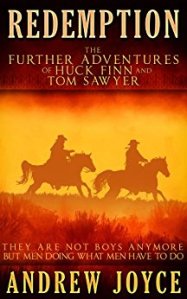
Many whites were killed in the ensuing weeks. However, not all of the Dakota went to war. Many stayed on the reservation and did not pick up arms against their white neighbors. Some saved the lives of white settlers. Still, over 700 hundred whites lost their lives before the rebellion was put down.

When the dust settled, all of the Dakota—including women and children, and those people who had saved settlers’ lives—were made prisoners of war.

Three hundred and ninety-six men were singled out to stand trial before a military commission. They were each tried separately in trials that lasted only minutes. In the end, three hundred and three men were sentenced to death.

Even though he was occupied with the war, President Lincoln got involved. He reviewed all three hundred and three cases and pardoned all but thirty-eight of the prisoners.

On a gray and overcast December morning in 1862, the scaffold stood high. Thirty-eight nooses hung from its crossbeams. The mechanism for springing the thirty-eight trap doors had been tested and retested until it worked perfectly. At exactly noon, a signal was given, a lever pulled, and the largest mass execution to ever take place in the United States of America became part of our history.

*************

Short bioAndrew Joyce left high school at seventeen to hitchhike throughout the US, Canada, and Mexico. He wouldn’t return from his journey until decades later when he decided to become a writer. Joyce has written five books, including a two-volume collection of one hundred and fifty short stories comprised of his hitching adventures called BEDTIME STORIES FOR GROWN-UPS (as yet unpublished), and his latest novel, YELLOW HAIR. He now lives aboard a boat in Fort Lauderdale, Florida, with his dog, Danny, where he is busy working on his next book, tentatively entitled, MICK REILLY.

Learn more about Andrew:   Website   Blog   Facebook   Twitter   LinkedIn  Amazon   Barnes & Noble   Smashwords   iTunes   Kobo