Category Archives: Writing

Pendulum Type Action – Guest Post…

A delightful guest post on The Story Reading Ape’s blog by Craig Boyack on writing short-form fiction…

Chris The Story Reading Ape's avatarChris The Story Reading Ape's Blog

Thanks to The Story Reading Ape for this incredible opportunity to run four monthly articles on his website. The big question is what exactly to use this space for. Quite honestly, I do want people to buy my books, but I am the brand and will stick with that for a few paragraphs.

One of my great loves is short form fiction. These can be micro-fiction, short stories, even novellas. I grew up reading these, and was saddened when they nearly died out.

In hindsight it’s easy to see. Short form was the preference of magazines and newspapers. If you look back far enough some of our classic fiction came from those media, and not what we call novels. Sherlock Holmes came to light this way.

When the Internet took control of our lives, most of the paper media faded away. We get our news online, or on television. Magazines…

View original post 576 more words

Guest Post: Finding that book inside you

Ari Meghlen hosts the inspirational Sally Cronin, who offers superb advice on breaking into publishing through writing non-fiction. A must-read for new as well as veteran authors…

Ari's avatarAuthor Ari Meghlen Official Website

This week’s guest post is by the lovely Sally Cronin who is discussing the option of writing Non-Fiction books.

sallyFinding that book inside youby Sally Cronin

Not everyone can dive into publishing with a best-selling novel, and most successful authors who have sold a million copies of their books are a rare breed.

Writing and then marketing our own books can be exciting but it can also be a daunting task. Whilst most of us who write love the process, we understand that we are competing with hundreds of thousands of other fiction titles that are published each year. This is particularly true if you are writing within one of the most popular of the genres such as Thrillers, Mystery or Fantasy.

View original post 1,353 more words

New Series – Smorgasbord Short Stories – Seeing is Believing – Sally Cronin

AUTHORS:  Sally Cronin is accepting short-story submissions for free promotion on her largely followed blog. Don’t miss this terrific opportunity and her own beautiful story that she shares ❤ 

Using the Seasons in writing – Guest Post…

A lovely piece by Jemima Pett on writing the seasons; or perhaps seasons that feel like characters? Hop over to Chris The Story Reading Ape’s blog to enjoy the charm of this article…

Chris The Story Reading Ape's avatarChris The Story Reading Ape's Blog

15015705 - closeup of apples on tree in orchardImage licensed from 123RF Stock Photo Copyright bialasiewicz

I’m a big fan of September. It’s the time when the countryside takes on a mellow look, apples hang heavily off trees, and the harvests are in, or nearly so. Birds that have an autumn song to proclaim their territories are in full blast singing to keep away this year’s kids, who are now on the look out for their own patch.

Of course, it’s also back to school time; traffic patterns change, and life in your household probably returns to the ‘where’s my schoolbag?’ drama of the mornings.

The race is on to get back from work or school before it gets dark, snatching the last few minutes of daylight to do essential things outdoors, whether sport, gardening or playing with the animals in their pens or hutches. It’s why I have my guinea pigs indoors – nothing comes between us…

View original post 356 more words

Nostalgia Post No.1: My Grandmother’s Indian Head – Guest Post…

Lorinda J Taylor  shares a bit of family history centered around an intriguing family heirloom. Hop over to The Story Reading Ape to see her lovely photos and share a bit of your nostalgia…

Chris The Story Reading Ape's avatarChris The Story Reading Ape's Blog

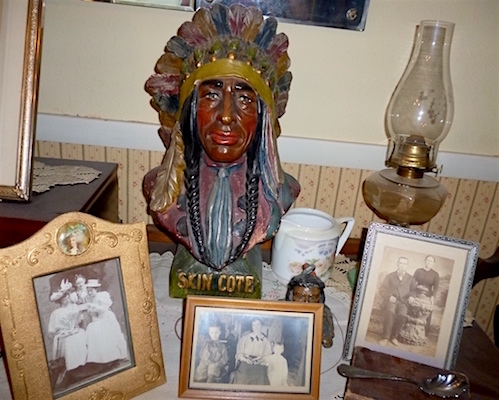
Indian Head 4Indian Head 1

It sits on the floor and the cat is scared to death.  She’s never seen at eye-level a nearly life-sized plaster bust of a Native American Chief in full-feathered headdress.  She skirts the edge of the living room, never taking her saucer-sized eyes off this menacing object.  We all laugh hilariously.  LOL, for sure, if that abbreviation had even been known back in the mid-1960s.

 I’ve been hauling that thing around ever since then, through many moves.  Right now it’s sitting on the sideboard in my dining room, surrounded by antique photos, as you can see in the accompanying pictures.  That’s my grandmother at the left of the left-hand picture, with two of her friends, taken in the 1890’s when she was a “teenager” (another term never used in those early days) and the belle of the small town.  And that’s my grandmother in the middle picture…

View original post 630 more words

Tolerance Is a Double-Edged Sword

Most dictionaries agree that tolerance is the ability or willingness to accept opinions, beliefs, behaviors, and ways of life different from our own, even if we disagree or disapprove of them.

On the surface, that seems an estimable quality, perhaps even exemplary. But tolerance is double-edged. It has a sharp edge and rough edge. Its sharp edge is broad-mindedness. Its rough edge is permissiveness.

Image is courtesy of Lucie StastkovaImage is courtesy of Lucie Stastkova LuSt4ART

What might we expect from the rough edge of tolerance – the indiscriminate acceptance of injustice; violence; abuse; suffering? The answer to this is evidenced somewhat in our global society today, a large element of which is immune to the subtle and progressive infusion of violence; a world hardened and unaffected by behaviors that harm and by the elements employed to inflict it. We’re being brainwashed by a handful of plutocrats who seek to gratify their unquenchable thirst for money and power, and to hell with the rest of us.

When I first heard the words, “Teach Children Tolerance,” I wanted to shout, “We already have! We’ve taught them to tolerate and permit all that’s wrong with the world.” In other words: tolerance run amok.

We’re bombarded daily with images of violence. The news, TV programs, movies, and video games are rife with aggression, murder, hatred, and fear. These images are so frequent and pervasive that many have become desensitized to them and no longer question their presence, validity, or veracity. If it was on the news, it must be true, right? Adults have the ability to reason, but what are we teaching our children when we passively accept and don’t speak out against violence for violence’s sake, violence to make headlines, violence to gross millions?

We’ve grown complacent, even apathetic. Worse yet, we’ve come to expect hatred and violence. When we hear about travesties like the $3.8 billion Dakota Access Pipeline, we’re incensed, but we’re not surprised. When we hear about yet another terrorist strike somewhere in the world, we’re terrified and infuriated, but we’re no longer surprised.

Expectation is a powerful magnetic force. Many of us don’t realize or understand the inherent and powerful energy dynamics of the human mind. And of those who do, many don’t believe that the energy of thought and intention can travel at the speed of light, both inwardly and outwardly, and thus affect the world around us. The subconscious mind believes that what we expect we therefore desire. And the subconscious mind seeks to serve and gratify.

When we wield the rough edge of tolerance to the extent of habit, we become complacent. Once content inside our familiar little cocoons, it becomes ever easier to turn a blind eye to the injustice and devastation outside. Violence blaring from the TV soon strikes a deaf ear. Images of abuse and suffering crash and collapse against the doors of a closed heart. We soon find ourselves standing on the threshold of apathy. And apathy is a tough nut to crack.

So how to turn this around . . .

Short of an epiphany or incapacitating personal tragedy, disgust and desire come to mind. Both of these emotions can act as internal dynamite. That may sound overly simplistic, but I know that I’m never more moved to take action than when thoroughly disgusted or when aroused by desire. And I’m not referring to sexual desire; although that, too, is a mighty catapult! I’m talking about the urge to alleviate suffering and oppose violence; the compelling force that has its origins in love. I’m talking about the sharp edge of tolerance.

The sharp edge of tolerance allows us to accept without judgment those who look differently, believe differently, worship differently, love differently – all within the context of being rather than harmful action. Simultaneously, it doesn’t condone inflicting harm. It doesn’t sit idly by with remote in hand while suffering is perpetrated, injustice is legislated, and violence is wielded as a means to an end.

Within the context of being, the sharp edge of tolerance moves us to embrace cultural diversity. Within the context of harmful action, it moves us to confront wrongful adversity. It is not complacent and it is not self-righteous. It recognizes what serves and what does not serve to advance and enlighten the spirit. It has the keen ability to split a hair right down the middle, because life is not simply black and white.

Tolerance is a double-edged sword. It can engage and embrace that which serves the advancement of spirit, or it can idle in neutral and accept that which harms all of Mother Earth. It has a hand in defining who we are as a species. I wonder which edge of tolerance we humans will ultimately wield . . .

Until the next time, my friends . . .  Namaste

© Tina Frisco 2016

4 Top Tips For Self-Publishing Your First Book With @Pokercubster

Debby Gies  is a master of many things, not the least of which is indie publishing. Head over to Sacha Black’s blog to read Debby’s excellent guest post and garner some very important tips on editing and formatting your manuscript, writing your book blurb, and developing your cover…

Sacha Black's avatarSacha Black

Self pub tipsWriters have a shit load of decisions to make:
Who to kill today, knife em or hang em, daily word count totals, book prices, whether to drown your book blurbing sorrows with vodka or wine… the list goes on.

But one of the biggest of all decisions of all is whether you’re going to run the rat race to traditional publishing, or  push the shiny red button yourself and claim the indie badge.

I made my decision. My blood runs thick with indie colours.

Publishers have their place, I’ll never see my books in a store *weeps* but that sure as shit ain’t enough of a reason for me to go begging book in hand to their doorstep.

Maybe there will come a time when I might need them and I’ll wander up tail between my word covered thighs. But I haven’t slaved over my book for two sodding years, only to be told…

View original post 2,290 more words

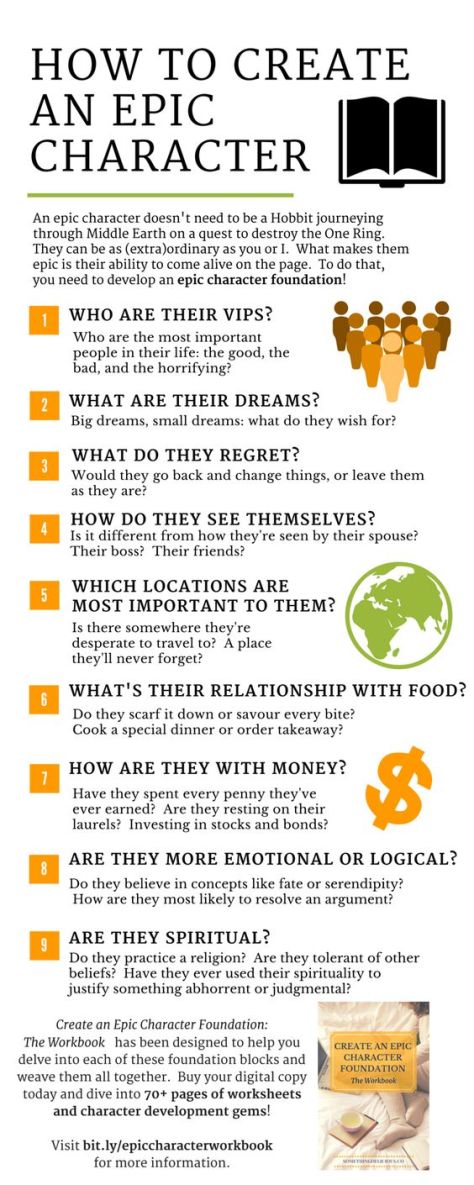
How to create an Epic Character Infographic…

Make your characters come alive! Build an epic character foundation. Visit Chris’ blog to learn how…

Chris The Story Reading Ape's avatarChris The Story Reading Ape's Blog

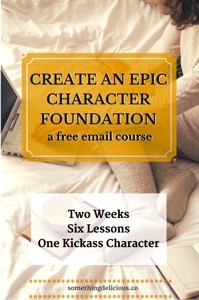
To find out more about Victoria Fry and her free email course,

click on the link or Infographic below:

How to create an Epic Character 

image

View original post

Smorgasbord Autumn Reading – Krishna’s Counsel by Mira Prabhu

I like to think of Mira Prabhu as a spunky visionary wielding ruthless compassion. Her books delight, mesmerize, enthrall, and encourage the soul to grow, if even a little. Catch this delightful interview on Sally Cronin’s blog…

EDITING 101: 02 – Description Depression…

Susan Uttendorfsky brings us her second great article in her Editing 101 series on The Story Reading Ape’s blog: How and why not to over or under describe scenes and characters…

Chris The Story Reading Ape's avatarChris The Story Reading Ape's Blog

Originally posted as the Dun Writin’—Now Whut? series on this blog, EDITING 101 is a weekly refresher series for some of you and brand new for others.

Courtesy of Adirondack Editing

 Do You Have Description Depression?

Are you a writer who uses rich, lush descriptions for their settings and characters? Or one who just wants “the facts, Ma’am, just the facts”? Is it an effort to decide how much description to use, where, and exactly what?

If you struggle with Description Depression in your writing, you’re not alone. There isn’t a “correct” way to use description in fiction, although, in my humble opinion, you’re better off using too little than too much.

In over describing, a writer runs the risk of annoying their readers. Many readers admit to skipping over large amounts of description. It didn’t used to be that way. Before the age of movies, television, the Internet, and smartphones…

View original post 486 more words