

My Sister of the Fey Colleen Chesebro has just released her new book, Fairies, Myths, & Magic, and I’m thrilled to have her as a guest on my blog.
Colleen is the author of The Heart Stone Chronicles: The Swamp Fairy, the story of fourteen-year-old Abigale Forester, who discovers her true destiny is to protect the nymphs from evil in an ever-changing modern world.

Buy the book HERE
Colleen is the founder of The Sisters of the Fey, the blogging collaboration of nine women whose “magic is inspired by a secret order of fairies that existed hundreds of years ago [and] which has been reborn in our spirits.” She offers weekly poetry and Tanka challenges on her blog, and is an avid reader who book reviews are outstanding.
Please join me in welcoming Colleen ❤️
*************
HAPPY SUMMER SOLSTICE!
I’ve planned this day out in my mind for over a year… Today, as a tribute to the Summer Solstice, my first book of poetry and short stories has become a reality. Fairies, Myths, & Magic ~ A Summer Celebration is now available on Amazon.

From June 21st through June 27th, this book will be featured at the introductory price of $.99! Grab your copy today!
Here is the Country Tagged Universal Book Link: Smarturl.it.FairiesMythsMagic
Blurb:
Step into a world where fairies, dragons, and other magical beings converge in a collection of poetry and short stories inspired by the celebration of Litha, the Summer Solstice.
Meet Drac, a dragon cursed by his own poisonous deeds, and two pixies who help an old man remember a lost love. You’ll meet a pair of fairies with a sense of humor, and a young girl who fulfills her destiny after being struck by lightning. Learn what happens when a modern witch’s spell goes terribly wrong. Meet the Sisters of the Fey, a group of Slavic Witches who sign a pact with the Rusalki Fey to preserve their magic for the good of all.
Atmospheric and haunting, the prose and poetry, will rewrite the mythologies of the past bringing them into the future.
What’s Litha ~ the Summer Solstice?
Litha is the celebration of the Summer Solstice—June in the Northern Hemisphere, and December in the Southern Hemisphere. Here in North America, the Litha Sabbat honors the longest day of the year with the most hours of sunlight.
Pagans celebrated Litha by observing and honoring the power of the sun. The sun’s influence reminded the people that the summer months represented fertility, ensuring the survival of the species.
During midsummer, magnificent fruit burst forth from the flowers, shrubs, and trees, providing ample food for all. Summer was also the most favorable time for the birthing and survival of animals, birds, and insects. This also included humans where the most births occurred during the months of July through October, which still continues today.
For the ancients, nothing represented the power of the sun more than fire. On the Solstice Eve, huge bonfires were erected on hilltops celebrating the link between the earth and heavens. Festivities lasted for days before and after the main event.

Yet, the primitive people recognized the need for balance between fire and water. Some celebrations included setting a wheel on fire, then rolling it downhill into a body of water, signaling the power of the sun at it’s mightiest, and also the day the sun’s power begins to diminish.
For me, a Summer Solstice celebration was the perfect day to share my collection of poetry and short stories inspired by the magic of the ancient pagans. I hope you’ll enjoy this collection. ❤️

Colleen M. Chesebro is an American Novelist writing YA fantasy and magical realism, cross-genre fiction, poetry, and creative nonfiction. She loves all things magical which may mean that she could be experiencing her second childhood—or not. That part of her life hasn’t been fully decided yet.
A few years ago, a mystical experience led her to renew her passion for writing and storytelling. These days she resides in the fantasy realm of the Fairy Whisperer where she writes the magical poetry and stories that the fairy nymphs whisper to her in her dreams.
Colleen won the Little and Laugh Flash Fiction Contest sponsored by the CarrotRanch Literary Community.com in November 2017 for her piece, called “The Bus Stop.” Her debut novel, The Heart Stone Chronicles: The Swamp Fairy won gold in the 2017 AuthorsDB.com cover contest.
Colleen lives in Colorado with her husband, Ron. When she is not writing, Colleen enjoys spending time with her husband and friends. She also loves gardening, reading, and crocheting old-fashioned doilies into works of art. You can learn more about Colleen at www.colleenchesebro.com.

You can find Colleen in all the usual places. Drop by anytime.
colleenchesebro.com Author Blog Amazon Author Page
Facebook Twitter Facebook Author Page
Sisters of the Fey Group Blog
Pinterest Google+ Instagram LinkedIn








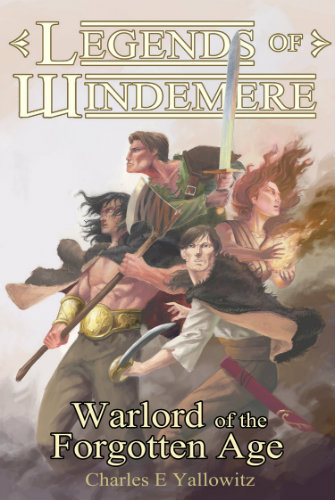
 main story plotted out and the main cast designed before I even start. This helps me maintain continuity and stay on target with foreshadowing. Sure, I typically had to rewrite the next outline after I finished a book, but the major plot points remained intact. That right there shows that I’m not 100% planner, which I think is the norm. We gravitate more toward one than the other, but there’s at least a spark of the opposite in our work. As much as I plan stuff out, outlines rarely survive the first draft process. I merge, add, and erase sections while characters refuse to go along with some ideas. You have to learn how to roll with this because a natural flow is better than forcing stuff.
 didn’t work well for
 passionate about something that isn’t writing and then get passionate about the story, the two can cross wires without realizing it. The best example from me involves Fizzle the Drite (a small dragon with dragonfly wings) coming across a homeless child in the sewers. He’s a character who has always been in the wild where orphaned animals are either left to die or adopted by another animal. Fizzle would even step in to raise the kids, but his understanding was that it was the wilderness. To him, cities were supposed to be different and seeing the abandonment of a small child confuses him to the point where he thinks it’s plain wrong. He asks questions about why people let it happen, which I realized came from me because it’s something I personally don’t understand. So, a character and story can end up being a voice for the author to vent confusion and frustration about a social situation.
 attention to evil while good is dancing around in the background asking for even a half-hearted clap. Call me naïve and foolish *waits for the shouting to stop*, but I don’t like escaping reality to read about a world that comes off just as stressful and unbalanced as our own. Yeah, I’m getting very close to social commentary, but my point is that this led to my personal goal for writing. It’s to entertain and give people an adventure that will help them forget the world for a while. Making a point is nice and can make a story stronger, but I really find myself more interested in using my stories to make a reader shed some of their stress. It could even be hope. If these fictional characters can prove that good conquers evil then why can’t the flesh and blood citizens of our world not to do the same?
 TINA FRISCO
You must be logged in to post a comment.