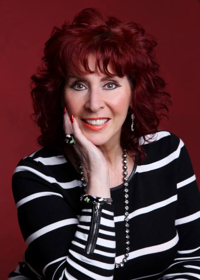
Debby Gies is a Canadian nonfiction/memoir author who writes under the pen name of D.G. Kaye. She was born, raised, and resides in Toronto, Canada. Kaye writes about her life experiences, matters of the heart, and women’s issues.
Welcome, Debby!
Hi Tina. I’m excited to be here guest appearing on your wonderful blog and mingling with some of your readers. Thank you so much for having me here today.
Debby, it’s my great pleasure to have you here. We’re looking forward to learning more about you, your writing process, and your outstanding and informative books.
Tell us a little about yourself. I’m a nonfiction/memoir writer and blogger. All of my books are written from my point of view, taken from experiences I’ve encountered. While my memoirs, P.S. I Forgive You and Conflicted Hearts are of serious subject matter, I do like to inject some humor in some of my other writings.
What is the title and genre of your latest book, and can you tell us 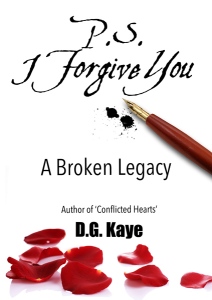 a little about it? My newest book, P.S. I Forgive You, is my story about finding forgiveness for my narcissistic mother before she died, and for myself for remaining with my decision not to go back to her after banishing her from my life several years prior to her death. This is Book II to my first book, Conflicted Hearts; but because of the subject matter, it could easily be read as a standalone.
What genres do you enjoy reading? I love reading biographies/memoirs, self-help books, books on writing, and stories about people who have overcome adversity.
Where do you like to write and why? I love to write at home in the quiet. I’m easily distracted, so no TV or music while I’m writing. I wish I was one of those writers who could pack up my things and go write in a public cafe, but I know I’d get lost in observing my surroundings; so I find I can discipline myself better at home.
 What time of day do you like to write and why? I love to write first thing in the morning after my coffee. I’m a multi-tasker, and once I get on the computer, I can get lost for hours between my emails, social media, blog, etc. So I have to do my writing first thing in the morning, or it’s not going to happen; although some of my best ideas come lurking in the wee hours of the night. In those instances, I have a handy journal I keep by my bedside to jot down ideas that will be elaborated on in the morning. If I don’t jot them down, I can consider them forgotten the next day.
When did you first start writing? I was writing as far back as I can remember when I learned to write. I had an active imagination and was highly in-tuned with my growing up in an environment of dysfunction. I started writing poems and making up Hallmark–like cards for loved ones and friends. Valentine’s Day was my favorite holiday for making cards. As I grew into my teens, I began journaling about my observations of my family life, and I continued to journal through life. I wanted to write books for years but hadn’t developed enough self-confidence to do so.
Tell us a little about your newest book. P.S. I Forgive You is a sequel  to Conflicted Hearts, a memoir about my narcissistic mother, the psychological hold she had on me by instilling guilt and fear when her demands weren’t complied with, and the heartache she bestowed on her loved ones. This sequel is a stand-alone in its own right. It’s a new journey about discovering and overcoming the narcissists inflictions and ultimately learning forgiveness, both for myself and my mother. The story is a completion of a life cycle, the cutting of the cord with all its frayed ends.
.Ebooks or paper? Do you have a preference? I love both! They each serve their own purpose for me. I love ebooks for their portability. I read on my kindle at night in bed for pleasure reading. But all of my books pertaining to the craft of writing are in paperback. I need a physical book for my writing needs as I need to be able to make it personally mine by highlighting passages, folding important pages, and whatever else I can do to leave reminders or important things I want to go back to for reference.
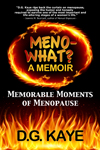 If you have a blog, what subjects do you write about? I sure do run a blog. My blog is comprised of articles that I find informative about writing or self-publishing, random things I find interesting or unjust, and I have a new Sunday book review series where I choose a book I’ve read and enjoyed to share with my readers.
What was the first book that touched you deeply? The Thornbirds written by Colleen McCullough. It’s a beautiful story about broken people living in a small town in Australia, encompassing undying and forbidden love.
What advice would you give a new writer? Try to write every day.  I’m not one who is disciplined by word counts. I just sit and write, whether it’s for a book I’m writing, ideas for a new book, a blog post, or just choosing a word prompt to keep the juices flowing. I may only crank out a paragraph or a page, or perhaps get lucky with a thousand words or more, but it’s daily exercise for the brain and good fuel to keep the writing keen. If we write something every day, it’s surprising how in a few months time we can have a rough draft written for a new book. Also, I recommend writing in the genre your comfortable in. Not all of our writing will appeal to everyone, so it’s best to write what you’re comfortable with, and eventually you will find your tribe.
Thank you so much Tina for inviting me here today to your blog to share a bit of myself and my newest book, P.S. I Forgive You: A Broken Legacy.
You’re very welcome, Debby. I’m delighted to share you and your work with my readers. Congratulations on the recent publication of your newest book! I wish you continued success as a published author, and I hope your books are read by many across the globe.
*************
P.S. I Forgive You is now available on Amazon.
Blurb: “I hurt for her. She wasn’t much of a mother, but she was still my mother.”
Confronted with resurfacing feelings of guilt, D.G. Kaye is tormented by her decision to remain estranged from her dying emotionally abusive mother after resolving to banish her years ago, an event she has shared in her book Conflicted Hearts. In P.S. I Forgive You, Kaye takes us on a compelling heartfelt journey as she seeks to understand the roots of her mother’s narcissism, let go of past hurts, and find forgiveness for both her mother and herself.
After struggling for decades to break free, Kaye has severed the unhealthy ties that bound her to her dominating mother—but now Kaye battles new confliction, as the guilt she harbors over her decision only increases as the end of her mother’s life draws near. Kaye once again struggles with her conscience and her feelings of being obligated to return to a painful past she thought she left behind.
Excerpt: The End Is Near
My mother had been dying for years, and through those years she refused to surrender her bitterness and remained in denial of her flaws. The many times I heard she was dying reminded me of the boy who cried wolf. I almost believed she was invincible, and even though I never wanted her to suffer, she did.
I thought it was just a horrible and sad way to die—holding hatred for those she had chased out of her life, living in bitter seclusion, knowing her days were numbered. Her once vibrant life had diminished into a mere existence of watching TV and complaining. She’d also given all her caregivers a difficult time, bitching at them all and letting them know how useless they were to her because of what her life had become. Nobody was exempt.
I asked my brother Robby why God didn’t just take her out of her misery and pain during one of the many times she was on the brink of death. Why would he not spare her from suffering? He replied, “God has his own plans.” I couldn’t help but wonder if he was letting her suffer because she had hurt so many people in her lifetime, but in my next thought I couldn’t believe God would play those cruel games, tit for tat.
About the Author: D.G. Kaye writes to inspire others. Her writing encompasses stories taken from events she encountered in her own life, and the lessons taken from them. Her sunny outlook on life developed from learning to overcome challenges in her life and finding the upside from those situations. Her refusal to accept the word No or the phrase I can’t keep her on the path to positivity. Kaye loves to look for the humor in whatever life can dish out, and when she isn’t writing intimate memoirs, she’ll bring her natural sense of humor into her other works. She writes with a rawness and honesty, leaving readers with something to take from her stories.
Learn more about D.G. Kaye: Website Twitter Facebook Google+ LinkedIn Amazon
Thanks so much for stopping by ❤







 Source: Free to use image Copyright amasterpics123 123RF Stock Photo


 For those who have not yet met me, I’m a freelance copy editor living in upstate New York near the Adirondacks. I’ve been writing and editing for over thirty years, and freelancing for the past few years.
 TINA FRISCO
You must be logged in to post a comment.